Requirements for viable nucs/colonies including adequate adult bees, brood, stores, queen status and seasonal timing.
Practical Beekeeper Standard · Competency C10
Establishing, increasing, uniting and moving colonies
Establish viable colonies and nucs, make controlled increase, unite colonies appropriately and move colonies or bees while managing biological, practical and biosecurity risks.
Knowledge
Knowledge requirements
Risks of making increase from colonies that are weak, unhealthy, poorly provisioned or unsuitable.
Principles of balancing brood, adult bee population, stores and space when making up nucs/splits.
Methods and risks of uniting colonies, including queen considerations and disease/biosecurity assessment.
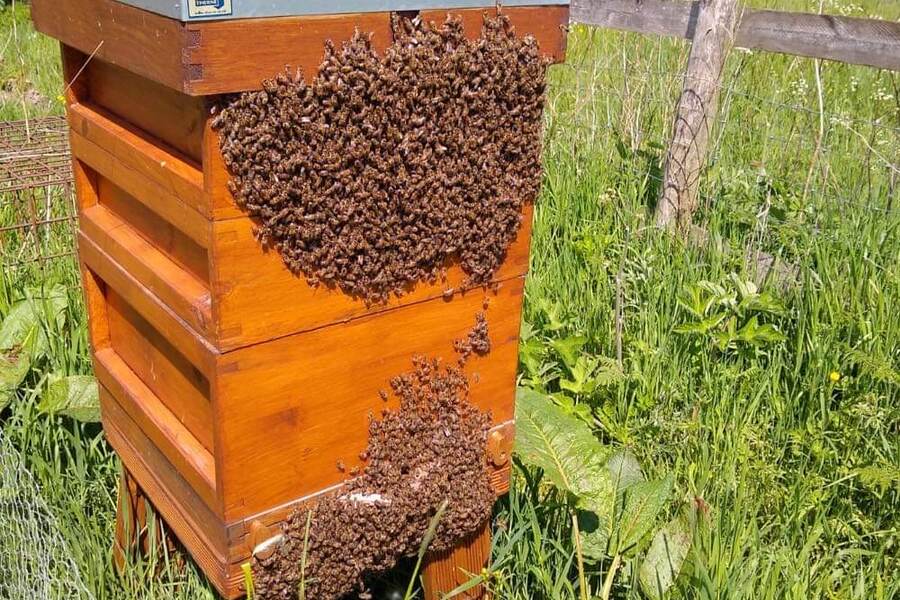
Effects of moving colonies on orientation, drifting and foraging.
Transport considerations including closure, ventilation, secure loading, temperature and public safety.
Post-movement or post-unite checks and recovery management.
Skills
Practical skills
Assess whether a source colony is suitable for increase.
Create and establish a viable nuc or split using a justified method.
Monitor development and correct imbalance where reasonably possible.
Assess whether colonies should be united and perform an appropriate unite.
Prepare and secure a colony/nuc for movement.
Move colonies safely and re-establish them appropriately at destination.
Apply biosecurity principles to all increase, uniting and movement decisions.
What assessors need to see
Practical increase is mandatory. Unite and movement should be evidenced where available, with scenario-supported evidence only where a natural opportunity does not arise.
Based on genuine activity
Knowledge may be evidenced through short written explanations, annotated photographs, small videos, records or professional discussion, but it should relate to an actual activity, colony, apiary, manipulation, observation or management decision the candidate has carried out or genuinely been involved in.
Evidence accumulates over time
One activity may map to several KSBs. Practical competence must be evidenced practically; scenarios support rare or uncontrollable situations but do not replace practical evidence where a genuine opportunity can reasonably occur.