Biological drivers and colony conditions associated with reproductive swarming.
Practical Beekeeper Standard · Competency C5
Swarm prevention, control and colony reproduction
Recognise swarm preparation and apply appropriate swarm prevention and control techniques according to colony condition and management objectives, including honey production and controlled increase.
Knowledge
Knowledge requirements
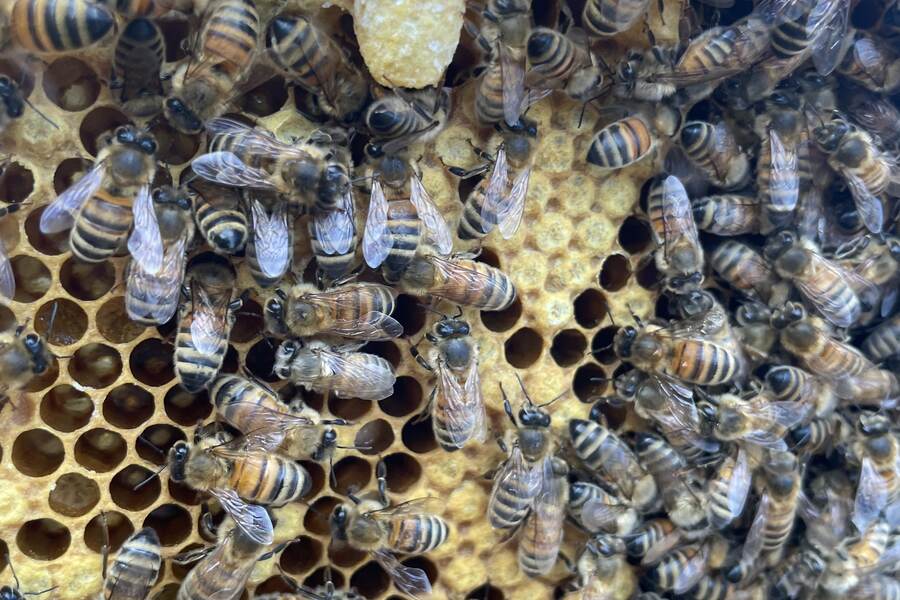
Differences between play cups and queen cells of different functional significance, and limitations of inferring intent from cells alone.
Relationship between colony demography, congestion, queen status, genetics, forage and seasonal timing in swarm risk.
Difference between swarm prevention and swarm control.
Principles, advantages, limitations and risks of several accepted swarm-control methods.
Consequences of inappropriate destruction of queen cells or poorly timed manipulations.
How swarm-control methods can be aligned with honey production, queen replacement or controlled increase.
Skills
Practical skills
Assess swarm risk using colony evidence rather than relying on one sign.
Recognise circumstances requiring preventive management before queen cells are developed.
Select and perform an appropriate swarm-control manipulation.
Manage resulting colony units, queen cells and space appropriately after the manipulation.
Use controlled increase as an intentional management objective where colony strength and season make it appropriate.
Review the outcome of swarm-management decisions and respond to unexpected queen or colony status.
What assessors need to see
Genuine seasonal swarm-risk evidence is expected. Practical swarm control should be evidenced when a suitable natural opportunity occurs, with robust scenario/professional discussion used only where necessary.
Based on genuine activity
Knowledge may be evidenced through short written explanations, annotated photographs, small videos, records or professional discussion, but it should relate to an actual activity, colony, apiary, manipulation, observation or management decision the candidate has carried out or genuinely been involved in.
Evidence accumulates over time
One activity may map to several KSBs. Practical competence must be evidenced practically; scenarios support rare or uncontrollable situations but do not replace practical evidence where a genuine opportunity can reasonably occur.