Queen biology, mating, sperm storage, egg laying and normal seasonal variation in laying.
Practical Beekeeper Standard · Competency C6
Queen status, queen failure and colony recovery
Assess queen status and reproductive performance and respond appropriately to queenlessness, poor performance, unsuccessful mating, drone laying, laying workers and other queen-related colony problems.
Knowledge
Knowledge requirements
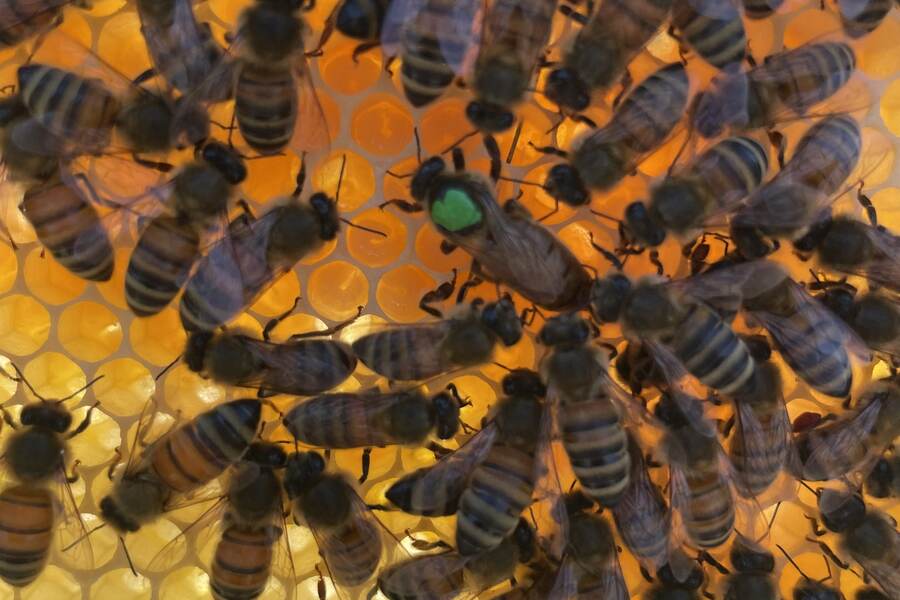
Evidence of queenright and queenless states when the queen is not directly observed.
Normal and abnormal brood patterns and plausible causes.
Supersedure, emergency queen rearing and post-swarm queen replacement timescales.
Drone-laying queens, laying workers and causes of apparent brood failure.
Risks and benefits of requeening, uniting, adding brood, waiting, reducing space or allowing natural replacement.
Why premature intervention after queen loss or emergence may create further problems.
Skills
Practical skills
Assess likely queen status using eggs, brood, behaviour, queen cells, timing and colony history.
Recognise evidence consistent with failing or abnormal reproductive performance.
Construct a realistic timeline after queen loss, swarming, cell capping or emergence.
Select an appropriate recovery strategy based on colony viability, season and available resources.
Requeen, unite or add brood/resources appropriately where justified.
Monitor the colony after intervention and confirm or revise the diagnosis/management plan.
What assessors need to see
Real queen-status assessments are expected, including at least one case where status is inferred from evidence rather than simply seeing a marked queen.
Based on genuine activity
Knowledge may be evidenced through short written explanations, annotated photographs, small videos, records or professional discussion, but it should relate to an actual activity, colony, apiary, manipulation, observation or management decision the candidate has carried out or genuinely been involved in.
Evidence accumulates over time
One activity may map to several KSBs. Practical competence must be evidenced practically; scenarios support rare or uncontrollable situations but do not replace practical evidence where a genuine opportunity can reasonably occur.