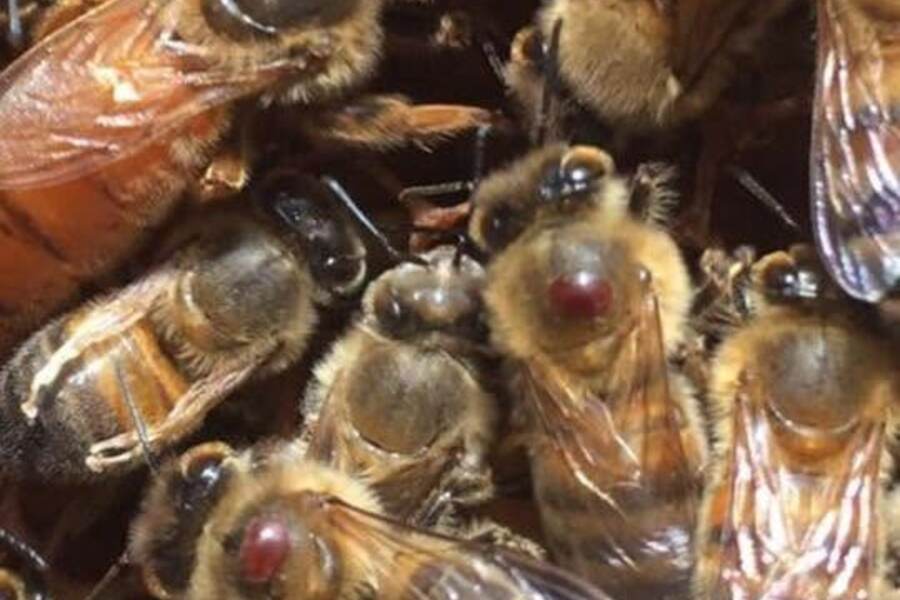
Varroa biology, phoretic and reproductive stages and interaction with brood cycles.
Practical Beekeeper Standard · Competency C8
Varroa and parasitic mite management
Monitor, interpret and manage parasitic mite infestation using appropriate monitoring methods, interventions, authorised treatments where applicable and integrated pest management principles.
Knowledge
Knowledge requirements
Effects of Varroa and associated viruses on individual bees and colony health.
Common monitoring methods, sampling error and limitations of each method.
Seasonal mite dynamics and how brood presence affects monitoring and treatment effectiveness.
Integrated pest management principles including biotechnical and chemical options.
Authorised-treatment principles, label compliance, timing, residues, resistance and food-production considerations.
Why fixed thresholds or treatment calendars must be interpreted in context and current guidance checked.
Importance of evaluating treatment effectiveness rather than assuming success.
Skills
Practical skills
Use at least two appropriate Varroa monitoring approaches across the programme or explain why one method is unsuitable in a specific context.
Record and interpret monitoring results, acknowledging uncertainty where relevant.
Develop an IPM plan appropriate to colony, season and management objectives.
Select and apply an authorised treatment correctly where treatment is required.
Use non-chemical/biotechnical measures appropriately where suitable.
Evaluate post-intervention results and alter the plan if control is inadequate.
Maintain treatment and monitoring records sufficient for responsible management and food-safety traceability.
What assessors need to see
Actual mite monitoring data over time plus at least one evidenced management decision/intervention and subsequent review.
Based on genuine activity
Knowledge may be evidenced through short written explanations, annotated photographs, small videos, records or professional discussion, but it should relate to an actual activity, colony, apiary, manipulation, observation or management decision the candidate has carried out or genuinely been involved in.
Evidence accumulates over time
One activity may map to several KSBs. Practical competence must be evidenced practically; scenarios support rare or uncontrollable situations but do not replace practical evidence where a genuine opportunity can reasonably occur.